Patients and Parents
 Visitors
 Healthcare Professionals
 Research
 Donate and Support
 About HKCH
HKCH Newsletter
Multidisciplinary clinics combat complex cases
- Share :
-

-

-

-


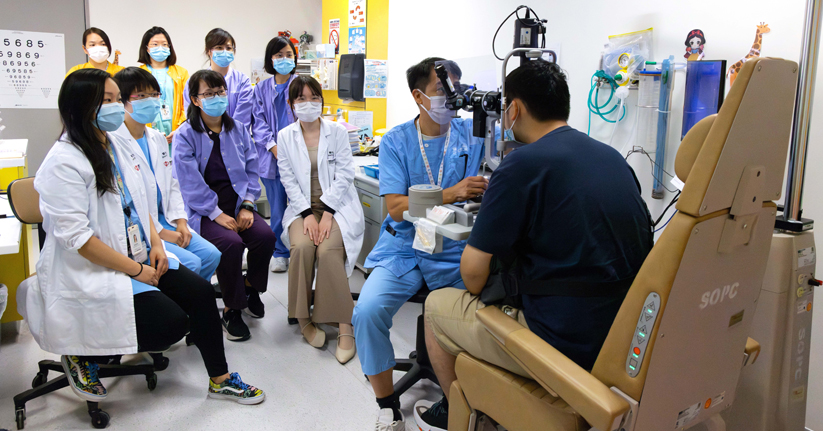
HKCH gathers comprehensive paediatric, surgical and related sub-specialties under one roof. A total of 26 multidisciplinary clinics have been established for the most complex and rare conditions, where different specialists, nurses and allied health professionals jointly give consultation to patients.
Consultant (Paediatrics & Adolescents Medicine) Dr Joanna Tung said, "Our healthcare professionals possess highly specialized knowledge and experience, but they may not be familiar with one another's fields. Nonetheless, the treatment they prescribe, such as medications and surgery, are interrelated. Multidisciplinary clinics can foster collaboration among different teams. They would review literature together and exchange views during case meetings. This allows them to make a collective diagnosis and formulate a comprehensive and coherent treatment plan. When they see the patient together at the clinic, they can discuss and make adjustments on the spot, which makes it easier to reach a consensus and results in better treatment outcomes."
Dr Tung said, "Take patients with thyroid nodules as an example. They are seen by specialists from Haematology and Oncology, Surgery and Endocrinology, who will collectively assess the necessity and extent of nodules excision. If the patient is diagnosed with cancer, the excision may impact the thyroid function and blood calcium level, leading to numbness in the limbs. In this case, supplements will be prescribed by the endocrinologist." She said that worried patients and parents often have a list of questions, like the necessity and risks of surgery. Having different specialists address their concerns together can convey consistent information.
Care that can be seen
When Jun Ran was in secondary three, he suddenly experienced blurred vision. It was first diagnosed as iritis but rapidly deteriorated with aqueous humor accumulation and retinal detachment. Both of his eyes then became completely blind. The culprit was believed to be immune system disorder. He was eventually referred to HKCH's rheumatology-ophthalmology joint clinic.
This clinic is the first and only of its kind in Hong Kong. It consists of doctors from the two specialties, nurses and allied health professionals. Together with pharmacists and medical social workers, they work tirelessly for Jun Ran's holistic care, like using medications to manage inflammation and regulating his immune system, performing multiple surgeries with the Hong Kong Eye Hospital, providing rehab training to help him cope with blindness, and securing funding support for him.
Hope finally arrived. Jun Ran's condition has improved significantly, and his left eye has now restored 70-80% of eyesight. His follow-up a few months ago was a touching moment for the whole team - he was finally able to see their faces for the very first time.
When Jun Ran visits other hospitals, he has to attend several subspecialties separately, and may get conflicting advices from different doctors. But in HKCH, he could clearly feel the benefits of attending a multidisciplinary clinic. He said gratefully, "I can meet all the healthcare staff at once, which saves my commute time. Once during a consultation, I told the doctor from the rheumatology team that I felt nauseous after taking immunosuppressant. She immediately discussed with the ophthalmologist. They decided that I could reduce the drug dosage, but I should come back more often for follow-up to ensure the inflammation would remain controlled. That day, I was able to pick up drugs of the new dosage."

Special equipment at SOPC