Patients and Parents
 Visitors
 Healthcare Professionals
 Research
 Donate and Support
 About HKCH
HKCH Newsletter
A fertile ground for nurturing research talent
- Share :
-

-

-

-


The Hong Kong Children’s Hospital fosters a vibrant research culture, providing a nurturing environment for staff to pursue research and enhance their capability.
From bedside to bench
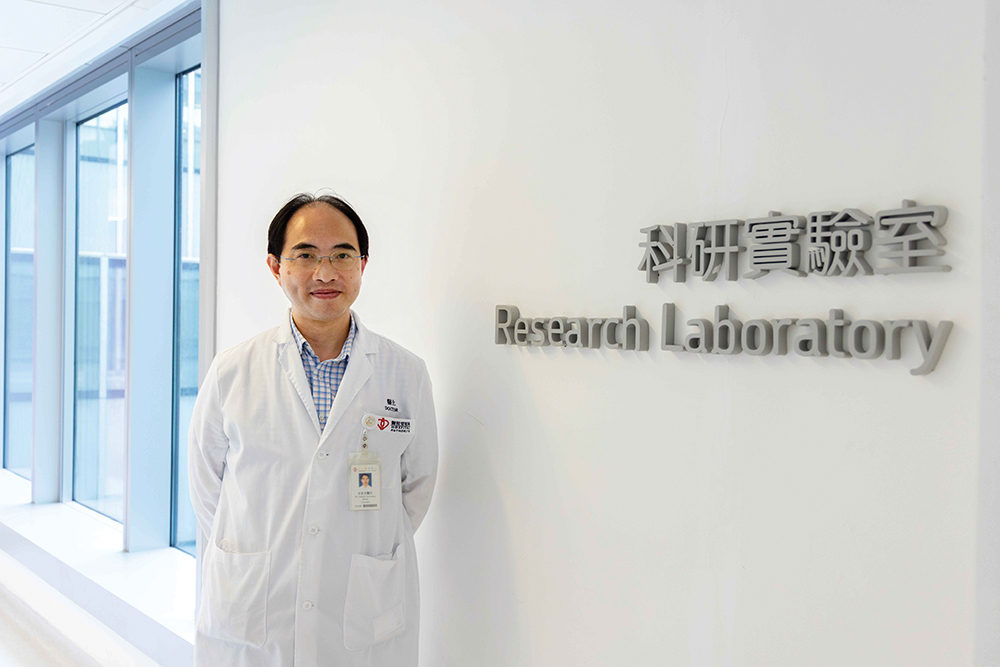
Dr Eugene Chan was among the first batch of doctors recruited by the HKCH, and has been specialized in kidney diseases. About a year ago, he joined the Chinese University of Hong Kong to focus on research. Explaining his transition, Dr Chan said, "As I encountered more and more young patients, I realized that our current knowledge wasn't enough to fully understand why they fell ill. Seeing them endure treatment side effects and miss out on school made me want to go back to the basics. Through research, I wish to uncover the causes and find viable treatments like clinical trial drugs to offer them new options."
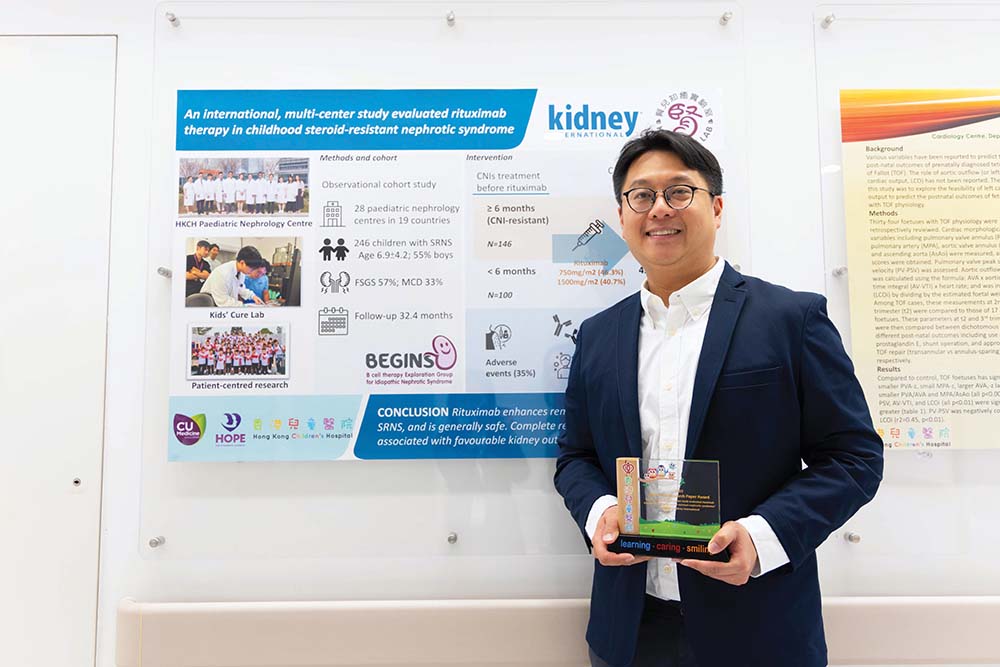
He believes the HKCH plays a pivotal role in nurturing his research ambitions. It funded his training in the UK where he met his research mentor, which also paved the way for the international study he later led. "I noticed that a biologic was used differently in the UK. This triggered me to investigate how to use it to treat children with nephrotic syndrome. We eventually built a research network of over 30 paediatric nephrology centres. Our findings led to updates in international guidelines on medication usage."
Dual-track career pathway
The Health Bureau, alongside the Hospital Authority and two medical faculties, launched the dual-track development pathway last year. It allows doctors to hold concurrent positions in public hospitals and universities, giving them the flexibility to balance clinical work with research.
Dr Daniel Cheuk is one of the four HKCH doctors who have been appointed under the scheme. He views the new arrangement as a bridge, carving out space for research within a demanding clinical schedule. Beyond just time, it provides him with direct access to university resources like data analysis tools, software and technical manpower, and fosters frequent exchange with academic researchers. "The two roles complement each other, often sparking new ideas that elevate both my research and clinical practice," he said.