


 Patients and Parents
 Visitors
 Healthcare Professionals
 Research
 Donate and Support
 About HKCH
HKCH Newsletter
Music therapy instills fun in the path to recovery
- Share :
-

-

-

-


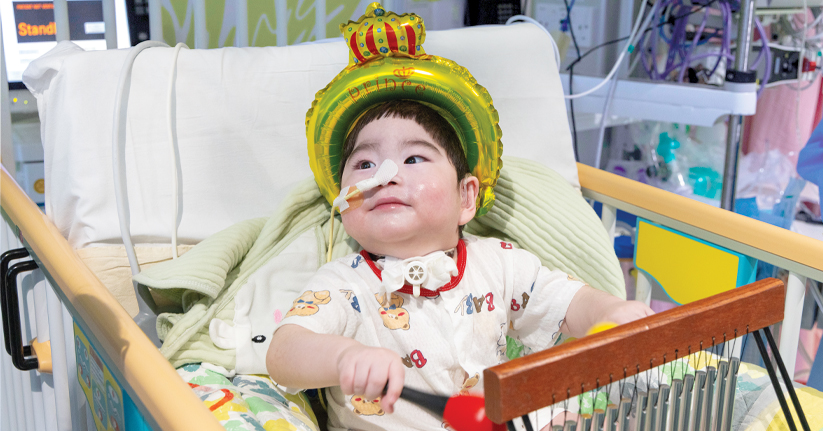
Thanks to the generous donation from the Apex Union Foundation, HKCH is now able to provide bedside music therapy on a regular basis, bringing beautiful tunes and positivity to child patients.
Music therapy helps alleviate anxiety, manage pain and divert attention. Yet, these are not the only benefits. Registered music therapist Michelle Tsang explained, “We use music as a tool to achieve physical, emotional, social, spiritual and cognitive goals. It can improve patients’ motor skills, coordination, attention and emotional expression. Moreover, music is a medium to enhance connection between patients and their carers and healthcare workers through active engagement.”
Tailormade song lists bring comfort
One-on-one therapy is customized to meet patients’ individual needs. Receptive approach mainly involves listening to music. The therapist will play the patient’s favourite songs with a guitar or keyboard. Lullabies created by parents can also be added to strengthen bonding and comfort their souls.
Giving patients a sense of control
As for active approach, the patient will be invited to play music together with the therapist, which can also integrate training, like asking the patient to sing to increase lung capacity. The musical instruments used are usually simple and attractive, so all patients can participate regardless of experience or physical limitations. Take the colourful rain stick as an example, it is so easy that even a baby can play.
During improvisation, the patient can feel empowered and more confident. “Patients always need to follow instructions for investigations and treatments. Music therapy creates a space for them to choose their own instruments and performing style. It grants them autonomy, not just happiness,” Michelle added.
What I want to say about music therapy…
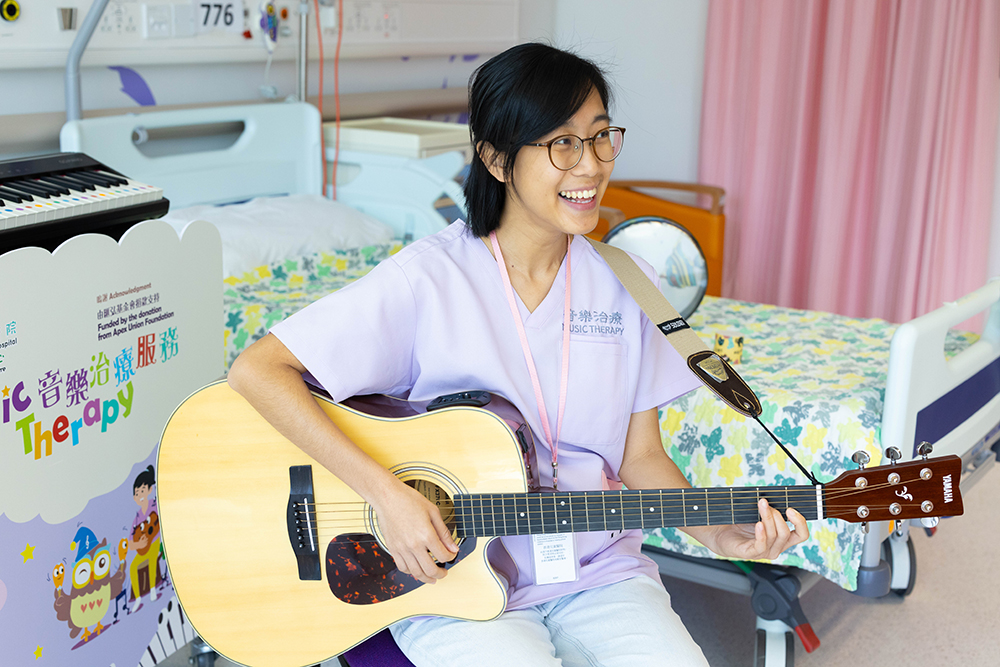
“We have to acquire knowledge in psychology, behavioral science and neurology, as well as music improvisation techniques to guide patients to play music and achieve therapeutic goals.”
Michelle Tsang, Registered Music Therapist
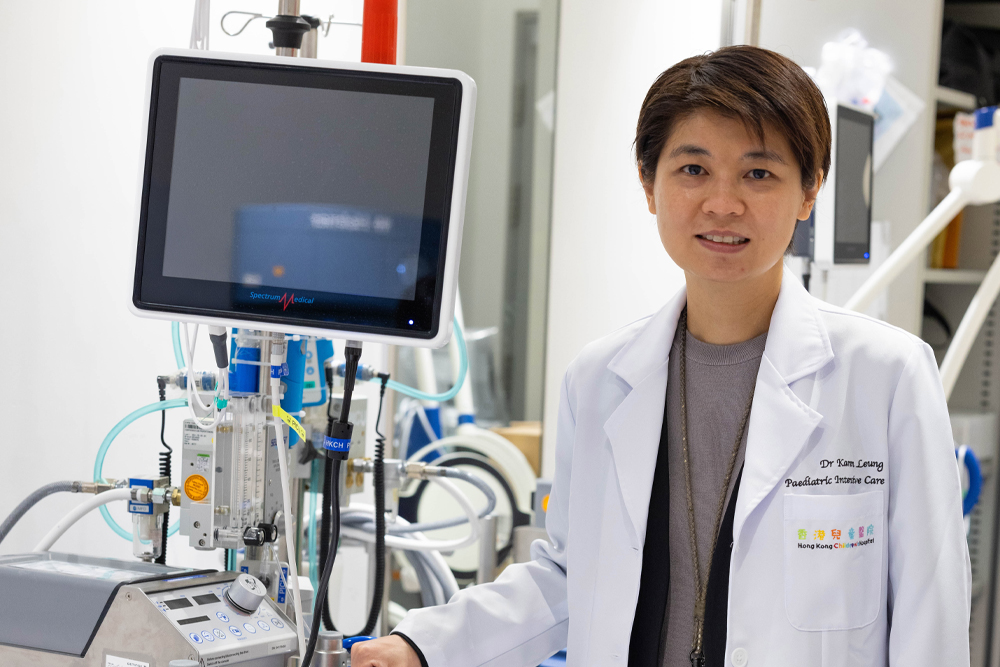
“I came across a patient who was on ventilator. His vital signs became stable whenever his mom sang. International experience indicates that sedation levels can be reduced for children in the ICU who receive music therapy.”
Dr Karen Leung, Consultant, Paediatrics and Adolescent Medicine
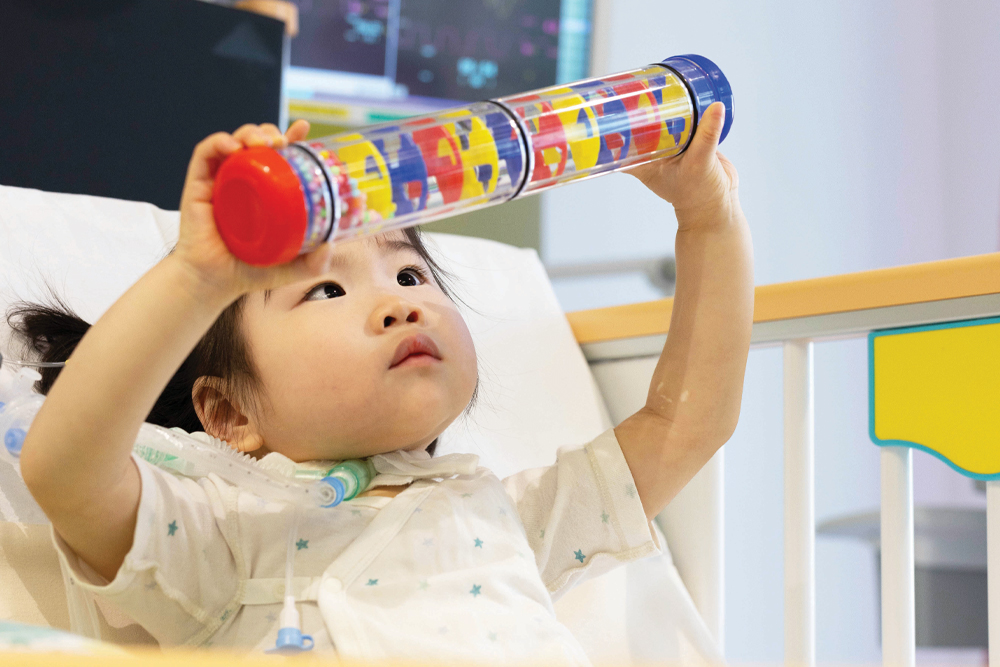
“My daughter enjoys music therapy very much. I am so moved to see her gradually learning how to turn the rain stick upside down when the sound stops. Her motor skills, hand-eye coordination and cognition have all improved.”
Ying Ying’s mom
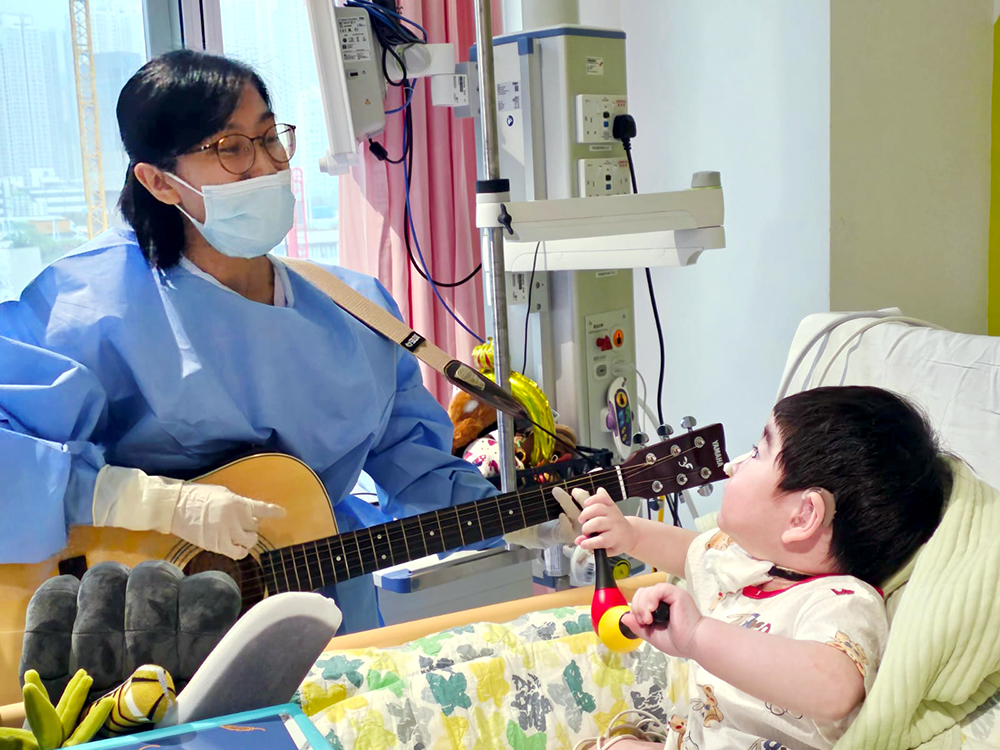
“My son would play with the musical instruments to create melodies with the therapist. He has gone through a lot of operations. It is so comforting and encouraging to see his smile and positivity during the sessions.”
Pak Chun’s mom