Patients and Parents
 Visitors
 Healthcare Professionals
 Research
 Donate and Support
 About HKCH
HKCH Newsletter
Musculoskeletal imaging: breaking conventions
- Share :
-

-

-

-


Many people think that paediatric imaging is mostly used for acute fractures or injuries. However, in the HKCH Department of Radiology, the musculoskeletal imaging team mainly serves children with musculoskeletal rare diseases and cancers. The team is committed to breaking conventional imaging methods and mindsets, delivering richer and more accurate information to guide treatment.
Dynamic perfusion imaging predicts surgical outcomes
Consultant (Radiology) Dr Joyce Chan used slipped capital femoral epiphysis as an example, "Traditionally, diagnosis mainly relies on X-rays or CT scans, but our hospital performs MRI with dynamic perfusion imaging before the surgery. We continuously capture images over six to seven minutes, checking whether blood is flowing normally to the target area to evaluate the patient's risk of osteonecrosis. This helps orthopaedic surgeons predict the surgical outcomes."
Stepping out of the dark room
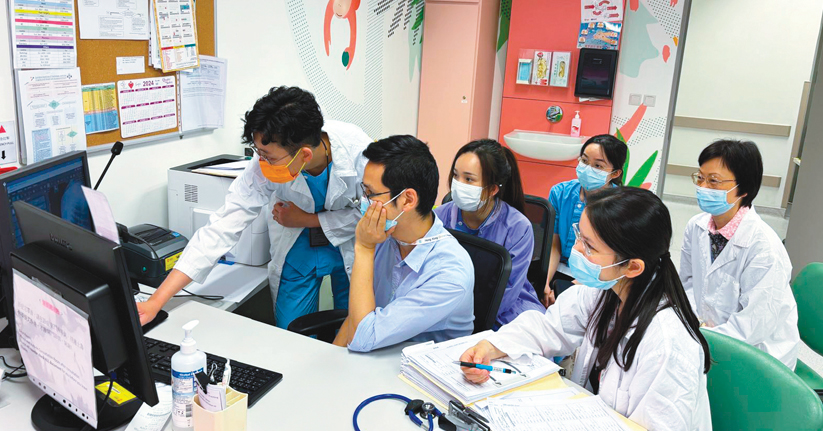
Rare diseases come in many varieties with significant differences between individual cases. For example, skeletal dysplasia is just an umbrella term, yet each patient may present with vastly different symptoms. Dr Chan said, "Contrary to the popular image of radiologists, we don't just sit in the dark room. We also can't use the same strategy for all cases. Instead, we join consultations with orthopedic surgeons, endocrinologists, clinical geneticists and other professionals in the clinic to gain an all-rounded understanding of the clinical and daily challenges of these children. This allows us to tailor the most suitable imaging modality for them."
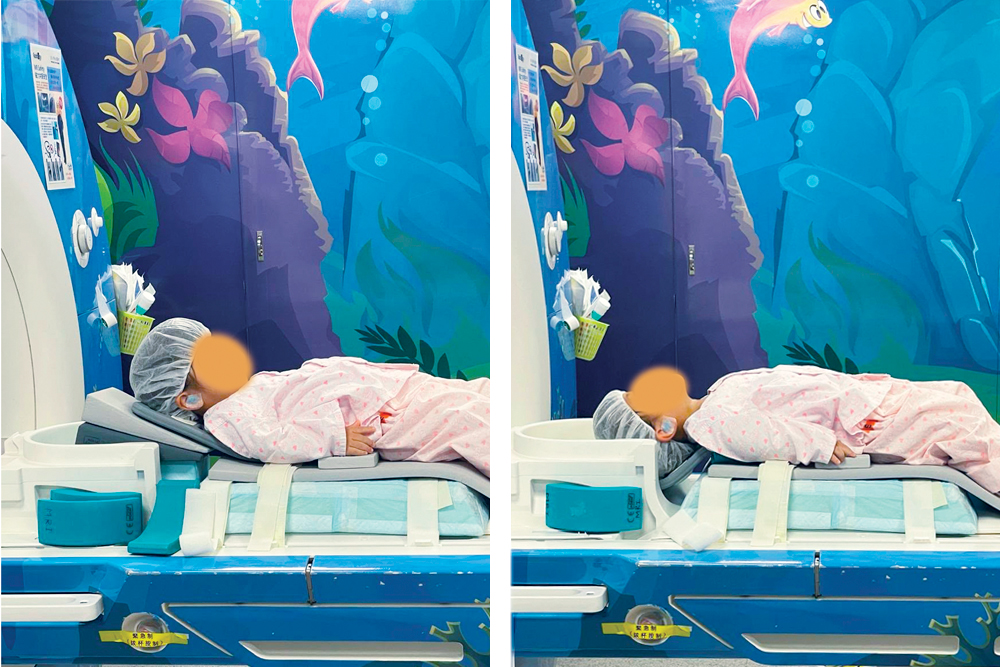
Dr Chan pointed out that HKCH offers a unique service – flexion and extension MRI. Unlike conventional static scans where patients lie flat, this method clearly shows whether the spinal cord is compressed when the head and neck move in different positions. Executing this scan for children with skeletal dysplasia is highly challenging. Since their neck is often restricted, any forced movement can be very dangerous. Therefore, the whole clinical team, including allied health professionals, coordinate extensively to assess the patient's tolerable motion range, and make sure they follow instructions to ensure the procedure is completed safely.