Hospital Authority
Site Map

HKCH Newsletter

Fetal imaging: paving a safe path for new lives

  • Share :  
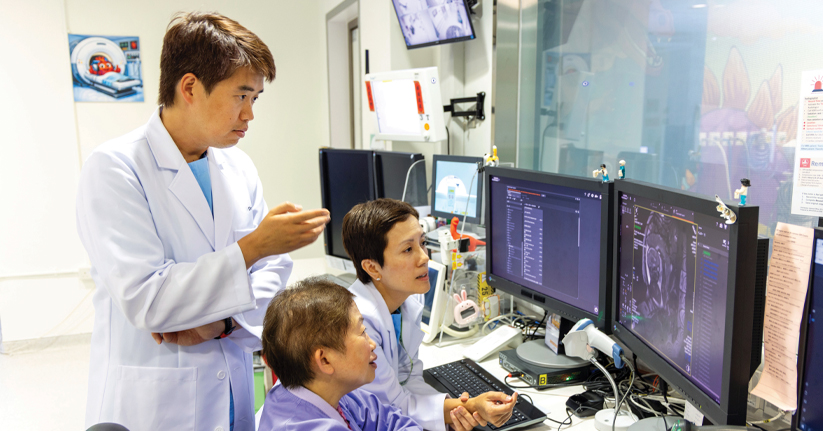
Radiologists and a radiographer analyzing fetal MRI images
▲ To prevent artefacts from fetal movement, radiologists and radiographers adjust MRI sequences in real time to capture high quality images.

Antenatal ultrasound is a joyful milestone for expectant parents. However, detecting any fetal abnormality can be overwhelming. The HKCH Department of Radiology provides fetal MRI scans for cases referred by public hospitals. By delivering high-quality imaging, it works closely with various specialties to fully prepare for the baby’s arrival. This is one of the key services of HKCH highlighted in the Policy Address.

Dr Elaine Kan, Chief of Service of the Department of Radiology explained, "Taking isolated mild fetal ventriculomegaly (enlarged fluid spaces in the brain) as an example, over 90% of cases ultimately result in normal development. When an anomaly is detected by ultrasound, we utilize fetal MRI to provide critical images to rule out associations and severe conditions, like disorders of cortical malformations. Cases will be referred to the clinical genetics team if needed, helping parents assess future pregnancy risks."

Associate Consultant (Radiology) Dr Claudia Cheung added, "Some critical conditions demand early intervention. For example, a small or recessed lower jaw can cause airway obstruction at birth. Our MRI report enables the obstetrician to counsel parents and formulate contingency plans with relevant specialties, avoiding any delay in care."

Cross-hospital intervention saves newborn with spinal dysraphism


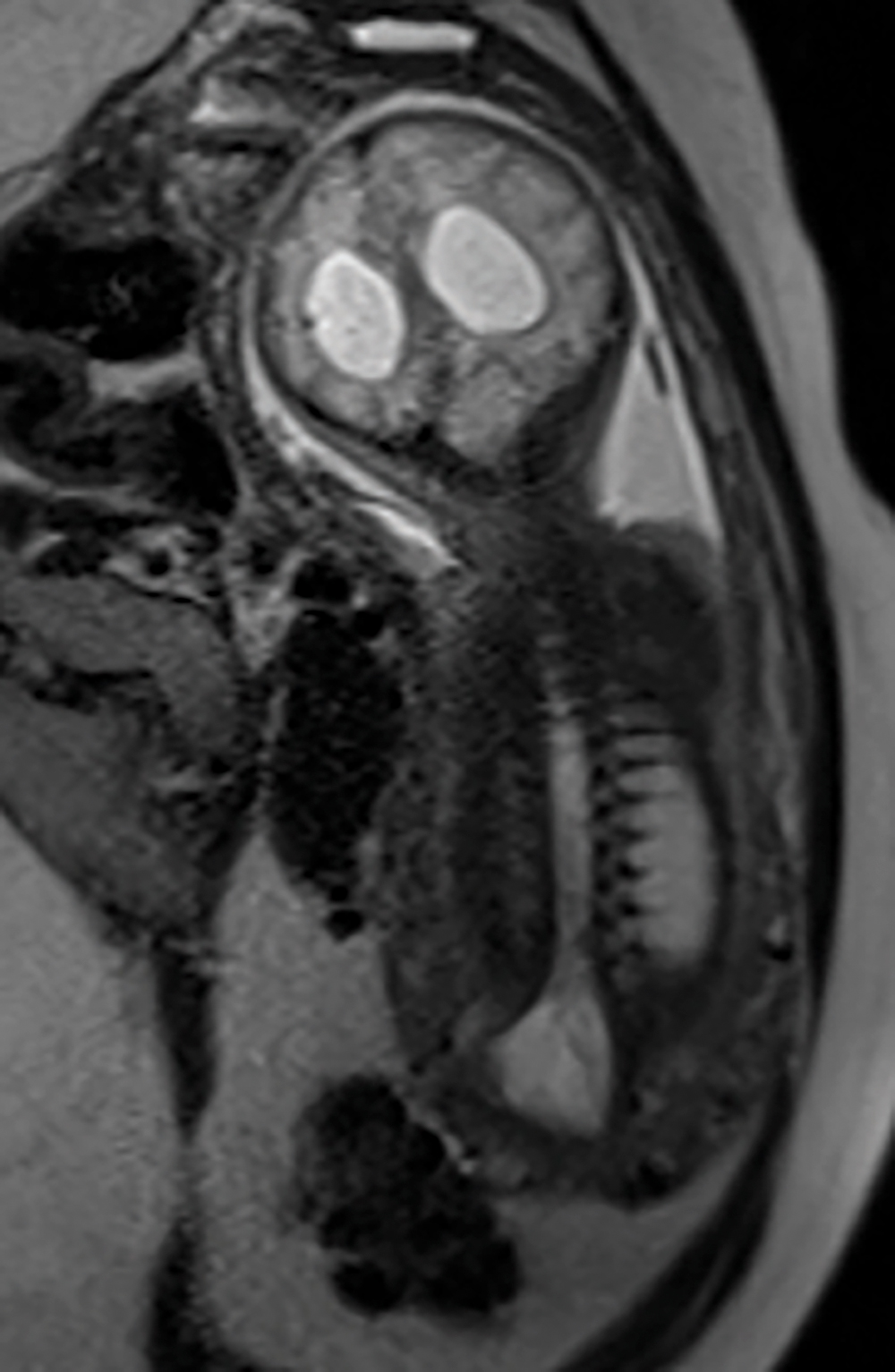
A complex case previously treated in HKCH demonstrates the importance of fetal MRI. An ultrasound exam revealed brain and spinal malformations in a fetus. Upon referral to the Department of Radiology for MRI, the baby was diagnosed with spinal dysraphism and Chiari II malformation.

A fetal MRI image
▲ By performing an MRI scan on a fetus, the Department of Radiology accurately diagnosed its spinal dysraphism, enabling multidisciplinary teams to craft a comprehensive pre-birth treatment plan that successfully saved this little life.

Anticipating severe damage and infection risks due to exposed spinal nerves after birth, various teams from different hospitals meticulously planned the baby's delivery, postnatal care, transfer and emergency surgery. On the day of birth at Kwong Wah Hospital, the baby was safely escorted by the critical care transport team to the HKCH neonatal intensive care unit. On the same day, a repair surgery was successfully performed by HKCH Neurosurgery and Queen Mary Hospital's Plastic and Reconstructive Surgery.

Accurate diagnosis is not built overnight. Dr Cheung explained, "As the fetus develops in the womb, the brain's sulcal pattern and lamination keep changing. Identifying abnormalities demands not only a thorough grasp of neuroanatomy but also extensive experience."

Previous  Content  Next