Hospital Authority
Site Map
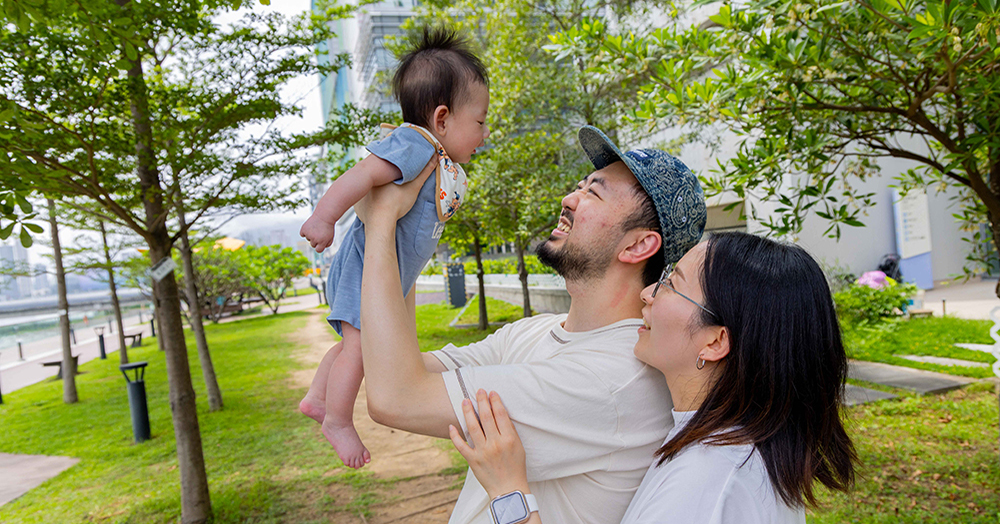
Kyren gradually recovers after surgeries, bringing back smiles to the family
▲Kyren gradually recovers after surgeries, bringing back smiles to the family.

Kyren was diagnosed with congenital diaphragmatic hernia (CDH) when he was still inside his mother's womb. It is a defect involving a hole in the diaphragm which pushes abdominal organs up to the chest, restricting lung development and potentially causing heart failure. He might not have been able to meet his family. Thanks to the collective effort of the Prince of Wales Hospital (PWH) and the Hong Kong Children's Hospital (HKCH), surgeries were performed before and after his birth, which enabled his lungs to develop and weaned him off the ventilator. After more than a month of hospitalisation, Kyren finally returned home and is now a happy seven-month-old.

"When the doctor first told me that Kyren's organs were displaced and could affect his breathing, I burst into tears. We had longed for his arrival. He just couldn't bear him suffering," Kyren's mother, Mrs Yung recalled. Kyren was diagnosed with CDH during routine prenatal check-up. Heartbroken, the Yungs sought medical advice everywhere and were eventually referred to the PWH Department of Obstetrics and Gynaecology.

Cross-hospital collaboration saved tiny life

To manage this complex case, the PWH and the Paediatric Surgery and Neonatology teams of HKCH jointly discussed and offered antenatal counselling. The cardiology team was also consulted. Mr and Mrs Yung were given explanation on the surgical plans and prognosis. First, the PWH Fetal Medicine team performed a procedure called fetoscopic endotracheal occlusion. Through the mother's uterus, they placed a balloon in the airway of the fetus which was only a few millimetres wide, enabling its lungs to expand and grow. The balloon was then removed at a suitable timing before birth. With his lung function improved, Kyren quietly waited to be born.

In an early morning at 35 weeks of pregnancy, Mrs Yung went into labor and her water broke. She rushed to the PWH with her husband for delivery. She said, “Many healthcare staff were helping in the operating theatre when Kyren was born. I was on the operating table, watching my tiny boy being resuscitated. Doctors immediately intubated him and sent him to the NICU. I was worried as I could not hear him cry at all."

On the day of his birth, Kyren was transferred to HKCH to prepare for the planned second surgery. HKCH performs over 80% of the neonatal surgeries of all public hospitals, and is the only centre providing extracorporeal membrane oxygenation (ECMO) service for children. In case Kyren's cardiopulmonary functions deteriorated, timely support could be initiated.

To ensure a safe transfer for Kyren, HKCH sent its specially trained Critical Care Transport team to PWH. After initial stabilisation, they escorted him during the ambulance ride. When he arrived at the HKCH NICU, he required the support of inotropes and high frequency ventilator.

"The doctors were very kind. They called us on the night of the transfer and the morning after. They said Kyren did quite well and didn't need ECMO, a sign that his lungs could still function," Mr Yung said.

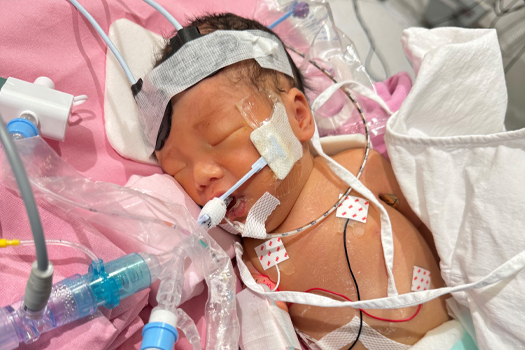
After surgery, Kyren was still on ventilator and feeding tube at the NICU
▲Before surgery, Kyren was on ventilator and feeding tube at the NICU.

Once Kyren's condition stabilised after a week, the Paediatric Surgery team performed an operation to move his organs to the right position and repair his diaphragm. The hole was too large that surgeons used Kyren's own abdominal muscle flap for closure to reduce the risk of reoccurrence.

The first free breath

Under the healthcare team's dedicated care, Kyren gradually weaned off the feeding tube and ventilator. For the first time in his life, he could breathe on his own and let out a gentle cry. He was taken out of the incubator briefly and wrapped in his parents' arms. To provide Kyren with the best nutrition, his mother kept expressing breastmilk and learnt to feed him.

"We have yearned for this day for so long! Kyren had been staying in the incubator since birth with tubes all around him. We dared not touch him, fearing that he might be infected by germs. When he finally got rid of the feeding tube and drank milk on his own, we were thrilled even though he could only take in just 3 ml at the beginning. Then he quickly ate more and more, meaning that he was growing fast. We were hopeful that he might be able to go home soon!" Mrs Yung said.

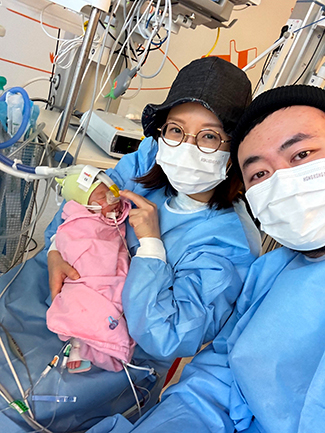
Mr and Mrs Yung could finally hold Kyren in their arms
▲Mr and Mrs Yung could finally hold Kyren in their arms.

As Kyren got better and better, doctors granted him a few days of home leave to celebrate his first Chinese New Year. Mrs Yung said, "I still feel excited thinking about it. Even though he was still wearing his hospital wristband, he could go home on Chinese New Year's Eve, and sleep in the crib we had prepared for him."

Then came the real discharge. At their home sweet home, the couple feels that every cry and smile of Kyren is a miracle. "He cries to tell us that he is hungry, he can poop, his clothes are getting tighter…all these little things mean a lot to us. We can now take care of him like any other baby!" Mrs Yung beamed with joy.

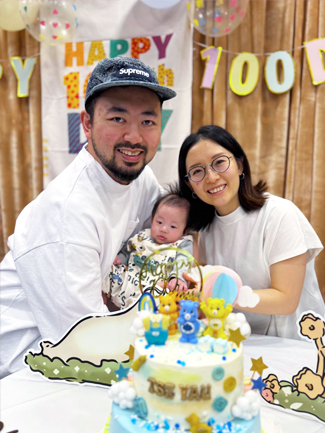
After undergoing major surgeries, Kyren grows healthily day by day. His parents celebrated his 100th day milestone with a party
▲After undergoing major surgeries, Kyren grows healthily day by day. His parents celebrated his 100th day milestone with a party.

Looking back on the challenging journey, the couple is deeply grateful to the HKCH and PWH healthcare teams. Mrs Yung shared, "The doctors' clear explanation and confidence were truly reassuring. Everything just happened as they had planned. They always kept us updated on our baby's condition. Whenever we had questions, they offered practical advice which really put us at ease. The nurses were very skillful, and you could feel their love by the way they looked after the babies."

Mr Yung adds, "The doctors showed care for us and encouraged my wife, which gave us strength. Every time we came to visit, the nurses would proactively tell us any changes in Kyren's condition and medications. Their professionalism is truly impressive."

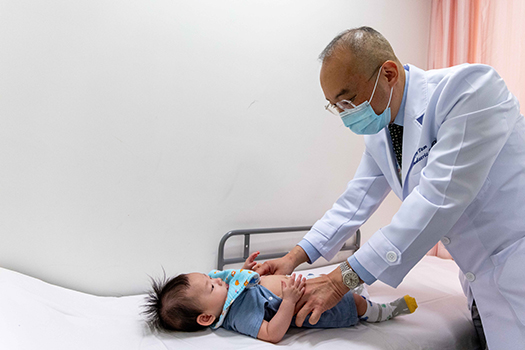
Kyren comes back to HKCH for regular follow-up. A paediatric surgeon is performing physical examination for him
▲Kyren comes back to HKCH for regular follow-up. A paediatric surgeon is performing physical examination for him.

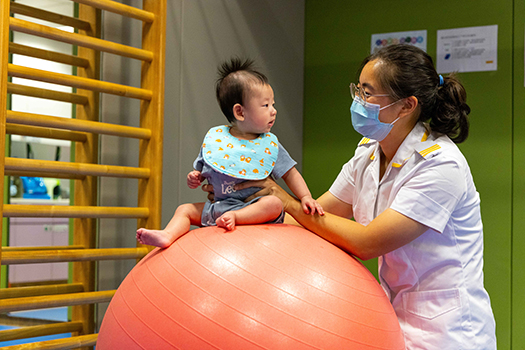
A physiotherapist assesses and trains Kyren's core muscles
▲A physiotherapist assesses and trains Kyren's core muscles.

After discharge, Kyren has regular follow-up consultations. He is also put in a high-risk infant programme with continuous follow-up and training by allied health teams, which comprises physiotherapists, occupational therapists, speech therapists, and dietitians. They work together to assess the development, including the gross and fine motor skills and reactions, offer feeding guidance, and provide nutritional advice and information. Mrs Yung says, "This keeps tracks of his recovery progress and gives us a peace of mind."

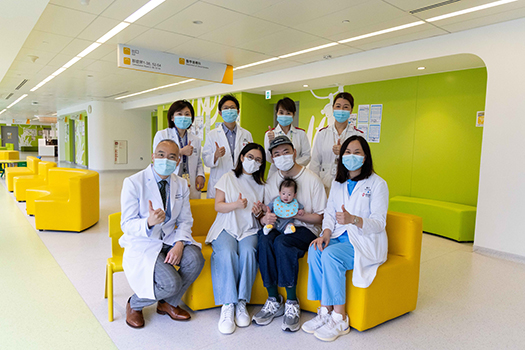
The HKCH Department of Paediatric Surgery and NICU stand by Kyren's family through the surgical journey
▲The HKCH Department of Paediatric Surgery and NICU stand by Kyren's family through the surgical journey.

              Content  Next